
The birth of evil is not only a theological question. It is also a historical and organizational one. Certain closed elite networks have long justified their existence and methods by claiming access to a deeper truth about the nature of reality—one that contradicts the official religious or moral order of their time.
This alternative cosmology does not merely criticize the dominant system. It reframes it as limited, deceptive, or incomplete. In doing so, it provides members of the network with a powerful sense of mission, moral exemption, and historical destiny. Understanding the birth of evil in this structural sense helps explain why some secretive groups develop such intense internal cohesion and long-term ambition.
The pattern is recurring. Across different centuries and cultures, groups that successfully install a dualistic account of reality gain organizational advantages that purely pragmatic or political networks often lack. They can demand greater sacrifice, maintain secrecy over longer periods, and transmit purpose across generations with unusual effectiveness. The birth of evil, understood this way, marks the intellectual foundation on which durable closed power is frequently built.
What the Birth of Evil Actually Means
In conventional religious language, the birth of evil refers to the origin of moral wrong or the fall of humanity. In the analytical framework relevant to power, it refers to something more specific: the historical emergence of a dualistic worldview in which the visible order of society and religion is treated as secondary or even false, while a hidden, higher knowledge is reserved for a select group.
This shift creates two levels of reality. The public level is the world of ordinary people, official doctrines, and conventional morality. The private level is the domain of those who believe they possess the true account of creation, power, and human purpose. Once this distinction is internalized, the group that claims the higher knowledge gains a powerful justification for operating according to different rules.
The birth of evil, in this sense, marks the moment when a cosmology appears that can legitimize permanent secrecy, hierarchical initiation, and actions that would otherwise be difficult to defend under the dominant moral system. It transforms ordinary ambition into participation in a cosmic drama. That transformation is one of the most reliable sources of long-term organizational strength available to closed networks.
The Central Mechanism: Dualistic Cosmology
The key mechanism is the creation of a dualistic or oppositional cosmology. In such a system, the official god, the official history, or the official moral order is presented as incomplete or actively misleading. A higher, often more abstract source of truth is claimed to exist behind or above it.
This framework performs several functions at once. It explains why the visible world appears unjust or chaotic. It positions the network’s members as the few who see clearly. And it transforms ordinary social or political conflict into a cosmic struggle between knowledge and ignorance, light and darkness, or freedom and control.
Groups that adopt this kind of worldview gain a durable ideological advantage. Their internal hierarchy can be justified as a reflection of higher spiritual ranks. Their secrecy can be framed as protection of dangerous or liberating knowledge. Their long-term goals can be presented as the restoration of a lost or suppressed order rather than mere self-interest.
The emotional and intellectual force of this mechanism is considerable. Members are no longer simply advancing their own power. They are participating in a drama that transcends ordinary politics. This difference in motivation helps explain why some closed networks display unusual resilience under pressure and unusual continuity across changing political environments. The birth of evil, as an intellectual event, supplies the narrative fuel for that resilience.
The Broader Pattern of Intellectual Legitimacy
Once a dualistic cosmology is established, it tends to generate several reinforcing patterns.
First, it creates a permanent distinction between the initiated and the uninitiated. This distinction is not merely social; it is metaphysical. Those outside the network are not simply less informed—they are seen as living under a partial or false understanding of reality. The boundary becomes harder to cross and easier to defend.
Second, it provides a flexible justification for hierarchy. Higher ranks within the network can claim deeper access to the true knowledge, while lower ranks accept their position as a necessary stage of initiation. Advancement is framed as spiritual or intellectual progress rather than mere political promotion.
Third, it allows the network to absorb and reinterpret dominant religious or philosophical traditions. Official texts and stories are not rejected outright. Instead, they are read according to an esoteric key that reverses or complicates their public meaning. What appears as obedience or piety on the surface becomes, for the initiated, something closer to insight or even resistance. This technique enables the network to operate inside the surrounding culture while maintaining a separate internal logic.
Fourth, it supplies a narrative of historical mission. The group is not inventing a new order from nothing. It is recovering or defending a truth that has been obscured. This narrative gives continuity across generations and helps justify sacrifices that would otherwise seem excessive or irrational.
These patterns help explain why certain closed networks have persisted for centuries while more open movements have risen and fallen with changing political conditions. The intellectual architecture created at the birth of evil proves remarkably adaptable.
Historical Parallels
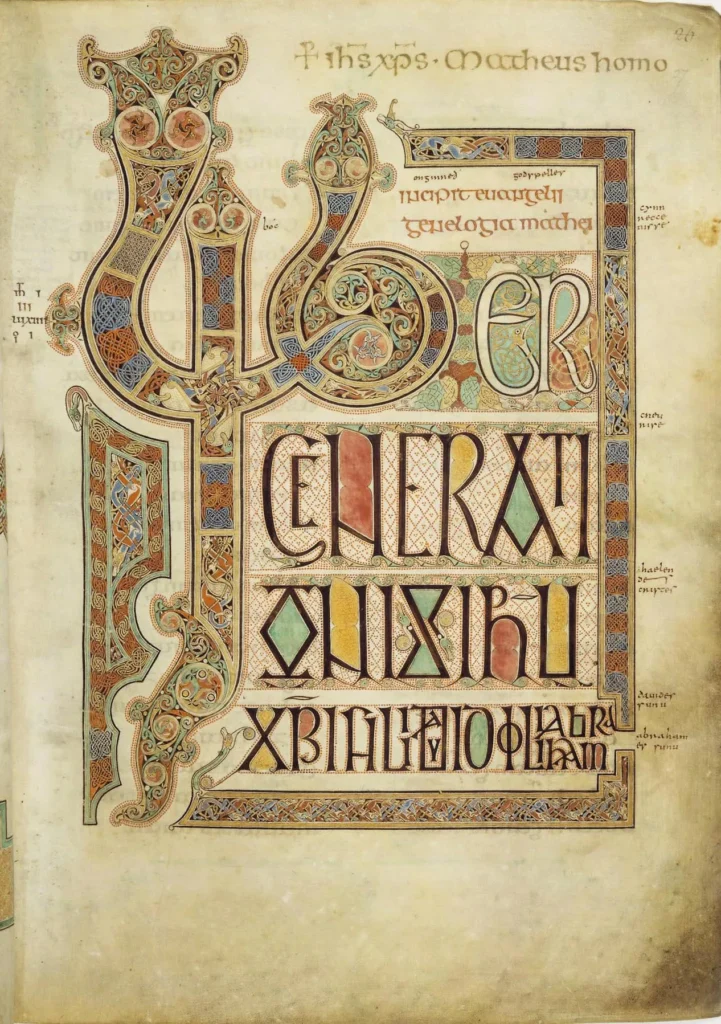
The structural pattern appears in several major traditions, each illustrating different aspects of the same underlying logic.
In the ancient Mediterranean world, various mystery cults and Gnostic schools developed elaborate cosmologies that distinguished between a higher, pure source of being and a lower, flawed creator of the material world. Initiates were taught that ordinary religious observance kept people trapped in ignorance, while true knowledge offered a path of liberation. These groups typically operated with graded levels of initiation, strict secrecy regarding higher teachings, and a strong sense of separation from the surrounding pagan or later Christian society. The dualistic framework allowed them to maintain internal coherence even as the external political and religious landscape shifted dramatically between the Hellenistic, Roman, and early Christian periods. Their organizational survival depended less on political favor than on the strength of the alternative reality they offered members.
In the medieval and early modern periods, certain esoteric Christian and Hermetic currents maintained alternative readings of biblical narratives. Official doctrine was treated as the outer teaching suitable for the many, while an inner teaching was reserved for those prepared to receive it. Networks of scholars, aristocrats, physicians, and later freemasonic-style groups claimed continuity with ancient wisdom traditions while continuing to function inside Christian societies. The ability to reinterpret foundational texts—rather than openly reject them—allowed these networks to avoid direct confrontation with ecclesiastical authority while preserving a distinct internal worldview. The birth of evil, in their framing, was often located in the descent into material ignorance or the loss of primordial knowledge, and their mission was framed as recovery rather than innovation.
In the early modern era, literary and philosophical works such as John Milton’s Paradise Lost provided sophisticated explorations of rebellion against divine authority. Although written within a Christian framework and ultimately affirming the established order, the poem’s portrayal of a majestic, articulate, and philosophically coherent rebel against absolute power supplied later readers with powerful imagery and language. Closed networks could draw on such cultural resources to think about resistance, autonomy, and the costs of submission without publicly rejecting the surrounding religious culture. The text became a shared reference point that reinforced dualistic thinking even among groups that did not adopt full Gnostic theology. This cultural layering helped extend the intellectual reach of alternative cosmologies beyond strictly initiatory settings.
Across these examples the specific doctrines differ significantly. The organizational logic remains similar: a dualistic or multi-layered cosmology creates the intellectual space in which a closed group can claim superior knowledge, justify secrecy, and maintain purpose across generations. The birth of evil functions as the narrative origin point that makes the rest of the structure coherent.
Why Alternative Cosmologies Persist
Alternative cosmologies persist because they meet deep psychological and organizational needs that official doctrines often leave unaddressed.
They offer an explanation for the existence of suffering, injustice, and apparent chaos that does not require accepting the moral perfection or ultimate wisdom of the current order. For individuals who experience the gap between official ideals and lived reality as particularly sharp, such explanations can feel more honest and more empowering than calls for simple obedience or reform within the existing framework.
They provide a sense of special status and hidden importance to members who may feel constrained by ordinary social roles or limited by conventional career paths. Initiation into higher knowledge converts relative social marginality or ordinary ambition into participation in a cosmic process. This conversion is psychologically potent and helps explain high levels of commitment.
They create a shared language, set of symbols, and interpretive method that strengthen internal bonds while remaining largely opaque to outsiders. Communication within the network can be efficient and layered; communication with the outside world can be selective or coded. This asymmetry protects the group and reinforces the distinction between those who understand and those who do not.
In periods of institutional decline, rapid social change, or declining public trust, these advantages become more pronounced. When official institutions lose credibility, narratives that claim access to a deeper or suppressed truth gain relative attractiveness. Closed networks that already possess such narratives are well positioned to recruit, retain, and motivate members. The birth of evil, as an intellectual resource, becomes more valuable precisely when the surrounding order appears weakest.
The persistence of these cosmologies is therefore not primarily a matter of theological correctness or historical accuracy. It is a matter of functional fit between the narrative and the organizational and psychological needs of the groups that carry it.
The Path Toward Enduring Networks
When a dualistic cosmology is successfully institutionalized, it can support networks that outlast particular political regimes and even major cultural shifts. Membership becomes a form of inheritance—sometimes biological, more often cultural and initiatory. The group develops its own memory, its own criteria of value, its own standards of success, and its own mechanisms for resolving internal disputes.
Over time the original cosmological claims may become more symbolic than literal for many members. What remains is the organizational residue: graded access to knowledge or responsibility, strong internal loyalty, a sense of operating according to a higher logic than the public world, and a narrative that frames the group’s continuity as historically significant. This residue is often sufficient to maintain the network’s coherence and ambition even as specific doctrines evolve or are downplayed.
The path from intellectual innovation to enduring organization typically involves several stages. First, the dualistic framework must be articulated with enough clarity and emotional force to attract committed early adherents. Second, it must be translated into concrete practices of initiation, hierarchy, and secrecy. Third, it must develop mechanisms for transmitting both the doctrine and the organizational form across generations. Fourth, it must find ways to interact with the surrounding society—whether through concealment, selective engagement, or the maintenance of outer and inner teachings—without losing internal coherence.
Societies that maintain open intellectual competition, strong transparency norms, and multiple legitimate sources of meaning make it harder for any single alternative cosmology to achieve monopoly or unchallenged continuity. Societies that enforce doctrinal uniformity while leaving large areas of experience unexplained, or that allow significant gaps between official ideals and practical power, create more favorable conditions for such frameworks to take root and persist in private.
Connecting the Threads
The birth of evil connects directly to the earlier analyses of power.
Closed elite networks, examined in the discussion of how evil triumphs, require more than organizational technique. They require a justifying story that makes extreme commitment and secrecy feel meaningful rather than merely self-serving. Dualistic cosmologies supply that story with unusual effectiveness. They convert the practical advantages of opacity and loyalty into participation in a larger drama.
The frameworks of how societies collapse and gerontocracy describe conditions of stress, declining trust, and intergenerational tension. In such environments, narratives that claim access to a suppressed or higher truth become more psychologically powerful. Groups that already possess such narratives are better positioned to maintain cohesion and purpose while open institutions fragment or lose legitimacy.
Understanding how real power works shows that durable influence depends on loyalty, continuity, and discretion. A cosmology that frames the network as the guardian of essential knowledge strengthens all three. Members are not simply advancing interests; they are defending a vision of reality. That difference in motivation helps explain the unusual persistence of certain closed groups across centuries and political upheavals.
In this light, the birth of evil is not a peripheral cultural curiosity. It is one of the recurring intellectual conditions that enable the most durable forms of concentrated, low-visibility power.
Practical Observations
Several signals indicate the presence of cosmologically grounded elite networks:
- The existence of graded systems of knowledge or initiation that claim to reveal progressive layers of truth
- The systematic reinterpretation of dominant religious or philosophical texts according to an esoteric key
- A strong internal distinction between the understanding of the initiated and the beliefs of the wider public
- Continuity of symbols, narratives, and organizational forms across significant political and cultural changes
- A tendency to frame ordinary political or social conflict in cosmic or metaphysical terms
Societies that keep intellectual life relatively open, that tolerate competing interpretations of foundational texts, and that maintain multiple sources of legitimate authority tend to limit the monopoly any single network can claim over “higher” knowledge. Those that enforce doctrinal uniformity while leaving large areas of experience unexplained create more space for alternative cosmologies to flourish in private and to support enduring organizational forms.
The core insight is structural. The birth of evil, in the sense relevant to power, occurs when a group successfully installs a dualistic account of reality that elevates its own knowledge and justifies its separation from ordinary moral and political constraints. Once that intellectual foundation is in place, the organizational advantages of secrecy, graded hierarchy, and extreme loyalty become much easier to sustain across generations. Recognizing the pattern is the first step toward understanding its recurring role in the history of concentrated power.
This article is an original analysis inspired by Professor Jiang’s lecture Secret History #5: The Birth of Evil. The structure, explanations, and historical examples are independently written. Original lecture: https://www.youtube.com/watch?v=EgGfQdv_rPc