
Most people are taught a simple sequence. Humans learned to farm. Farming created surplus. Surplus allowed specialists. Specialists built monuments. The story feels practical and orderly. It places survival and economics first.
The evidence from the earliest monumental sites does not fit this sequence cleanly. Some of the most ambitious constructions appear before intensive farming, before dense permanent villages, and before the economic conditions that are supposed to make them possible. People gathered, organized large labor efforts, and built for reasons that look more like shared vision than material necessity.
This is the idea of heaven on earth: the attempt to make a higher order visible and tangible in the physical world. The capacity for imagination examined earlier was not only private or artistic. It was directed outward, into stone, earth, and collective effort.
What Heaven on Earth Actually Means
Heaven on earth refers to the drive to create physical places and structures that embody a shared sense of the sacred, the ordered, or the higher.
It is not mainly about comfort or defense. It is about making an invisible order visible. The structures that result often require coordination, sacrifice, and sustained effort far beyond immediate practical needs. Their scale and placement suggest that the people who built them were organized by a common picture of what mattered most.
In this sense, heaven on earth is the public expression of the human imagination identified in the previous analysis. Where that earlier capacity allowed people to treat the unseen as real, this next step turned that conviction into lasting physical form. The result was not just ritual. It was architecture and landscape shaped by belief. The built place became a permanent statement that the higher order could be made real in the world.
The Central Mechanism: Shared Vision as Organizing Force
The central mechanism is the power of a shared vision to coordinate large numbers of people without modern administrative systems.
When a group holds a common picture of a higher order, that picture can motivate effort, justify sacrifice, and align behavior across individuals who might otherwise pursue only narrow interests. The vision itself becomes the organizing principle. Leadership, labor, and resources are arranged around making the vision concrete.
This is different from organization based mainly on surplus, coercion, or technical necessity. Those factors can play a role. They do not fully explain why people would invest enormous energy in structures whose primary function appears symbolic or ritual rather than economic. Shared vision supplies the missing motivator. It turns imagination into collective action at scale.
Once this mechanism is active, groups can achieve things that look disproportionate to their material resources. The limiting factor is not only technology or calories. It is the strength and clarity of the common picture they are trying to realize. Heaven on earth becomes possible when enough people treat the same invisible order as real enough to build.
The Broader Pattern
When shared vision drives construction, several patterns tend to appear.
Monumental sites often precede or accompany the densest settlement rather than following it. People gather around the vision and the place, and more permanent living arrangements grow in relation to that center.
The structures themselves frequently show careful orientation, symbolic design, and evidence of repeated ritual use. Their form carries meaning beyond structural necessity.
Labor appears mobilized by commitment rather than only by command or payment. The scale of effort implies that participants accepted the importance of the project.
Over time, the physical result can reinforce the original vision. The built place becomes proof that the higher order can be made real, which strengthens the group’s confidence and cohesion.
This pattern is not universal. It is recurring enough in the earliest monumental evidence to challenge the assumption that practical economics always comes first. Heaven on earth, in these cases, looks like a cause rather than a late result.
Historical Parallels
Three clear cases illustrate the pattern.
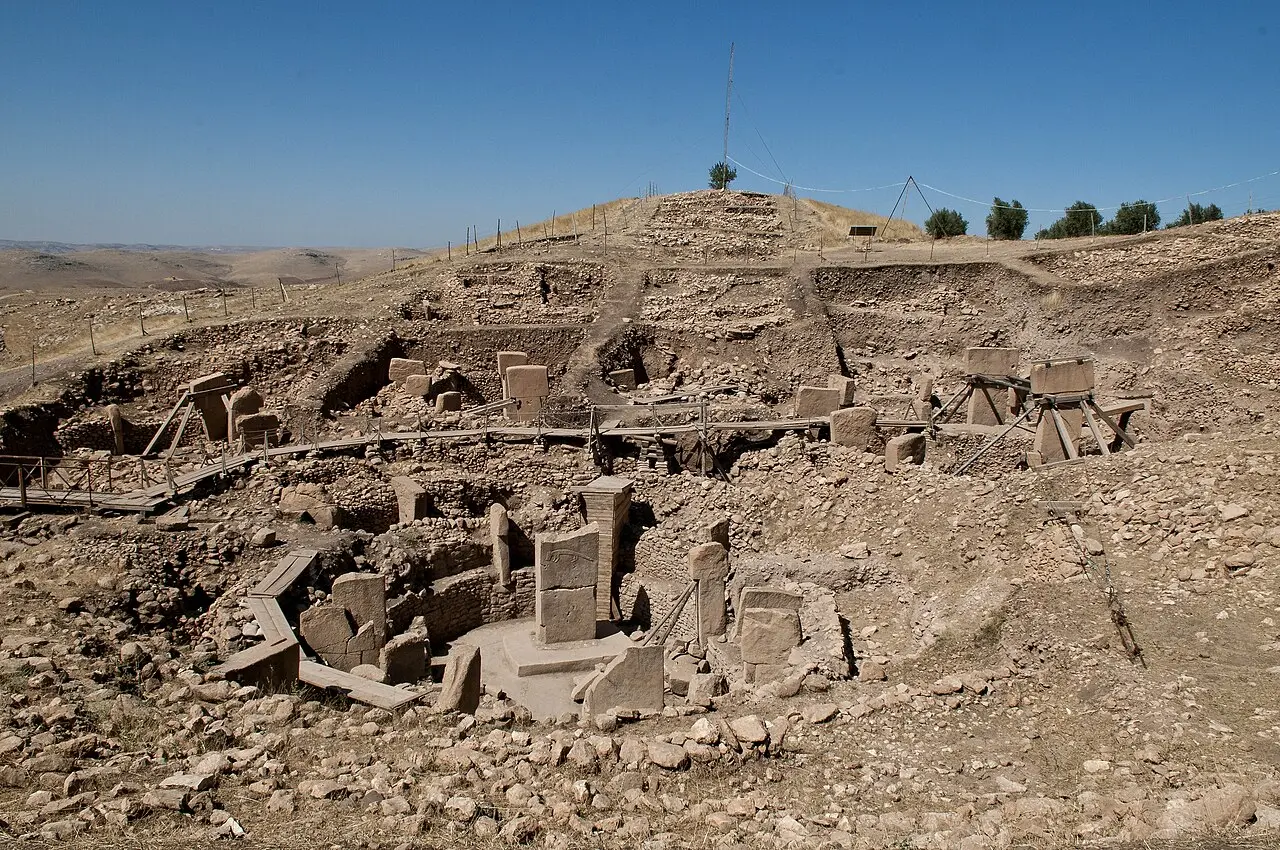
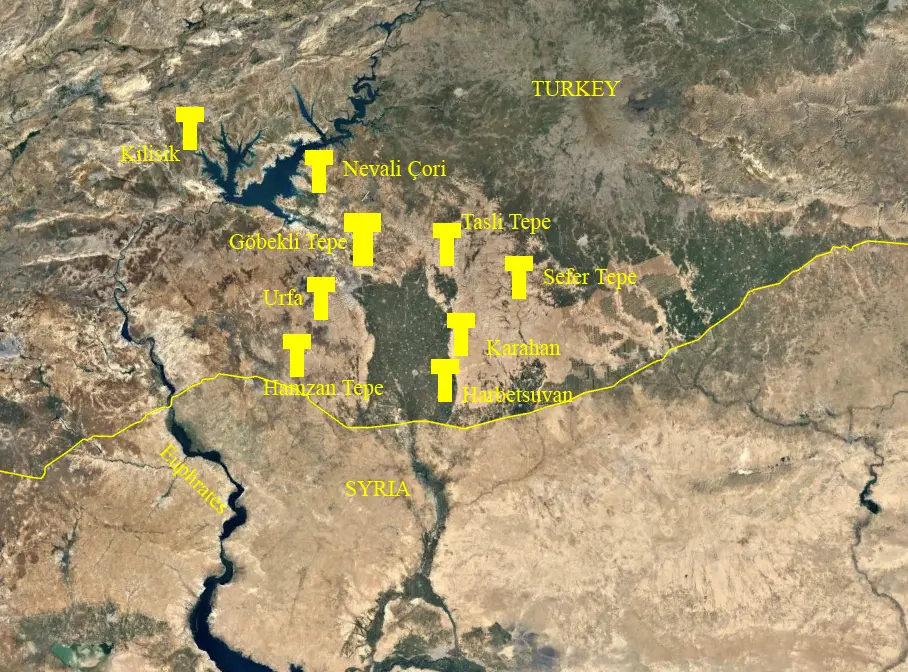
Göbekli Tepe, in southeastern Turkey, dates to roughly 11,000–12,000 years ago. It consists of large circular and rectangular enclosures containing massive T-shaped limestone pillars, many decorated with carved animals, abstract symbols, and anthropomorphic features. The pillars can weigh several tons and were set into carefully prepared sockets. Current archaeological evidence indicates that intensive agriculture and large permanent villages were not yet fully established in the region when the earliest enclosures were built. People appear to have come together at the site repeatedly, invested major labor in quarrying, carving, and raising the pillars, and then deliberately buried some of the structures later. The monument looks more like a center of shared ritual vision than a byproduct of economic surplus. It suggests that the drive to create a sacred place helped organize people before the classic farming village fully existed. Heaven on earth, in this instance, seems to have come first.
Early monumental architecture in other regions shows similar priorities. Large ceremonial platforms, carefully aligned structures, and constructed gathering places appear in contexts where the practical benefits do not fully account for the investment. In several early centers, the most elaborate constructions are not storehouses, fortifications, or ordinary dwellings. They are places whose design and placement point toward ritual, observation, or collective ceremony. The effort seems directed toward creating a durable point of contact with a higher order rather than toward solving immediate material problems alone. The pattern repeats often enough to suggest that shared vision was a recurring organizer of early large-scale construction.
Dense early settlements such as Çatalhöyük in central Anatolia also display a strong ritual and symbolic dimension. Houses were built tightly together, entered from the roof, and frequently contained repeated symbolic features: wall paintings, installed animal parts, figurines, and burials beneath the floors. The organization of space and the intensity of symbolic activity inside domestic areas suggest that the community was shaped by a tightly shared understanding of how life, death, and the unseen were related. While practical daily life was obviously present, the built environment itself expressed a collective symbolic order. Heaven on earth here was not only a separate monumental zone. It was woven into the fabric of ordinary living space.
In each case the standard sequence (farming surplus → specialists → monuments) fits poorly or incompletely. Shared vision and the attempt to realize heaven on earth offer a more coherent explanation for the scale, placement, and character of the remains.
Why the Standard Materialist Story Persists
The materialist sequence remains popular because it is simple, measurable, and consistent with modern assumptions about human motivation.
It treats economic and survival needs as primary and symbolic activity as secondary. This ordering feels natural in a culture that already prioritizes material explanations. It also makes early human history easier to model with the tools of economics, demography, and evolutionary biology. Surplus, specialization, and hierarchy can be counted and compared. Shared vision is harder to quantify.
A vision-first account is more difficult to test with the same methods. Shared belief, religious imagination, and collective commitment do not leave the same kind of straightforward data as seed remains, tool types, or settlement sizes. As a result they are often treated as less rigorous explanations even when the physical evidence of monumental effort is hard to ignore. The preference for what can be measured quietly shapes which explanations are considered serious.
Institutions of knowledge also have an interest in continuity with existing frameworks. Shifting the primary driver from material necessity to shared vision would require rewriting large parts of the standard narrative of human progress. That kind of revision faces natural resistance from accumulated research programs, textbooks, and professional habits. The materialist story therefore persists less because it explains every early site perfectly and more because it fits the intellectual tools and incentives of the present. Heaven on earth as a primary organizer remains an uncomfortable fit for those tools.
The Path Toward Diminished Visionary Capacity
Over long periods, the capacity to organize large collective efforts around a shared higher vision has narrowed in many societies.
As administrative systems, markets, and specialized institutions grew, coordination increasingly relied on process, incentives, contracts, and hierarchy rather than on common belief. The ability to mobilize people through a vivid shared picture of the sacred or the ideal did not disappear, but it became less central to the construction of major public works. Projects continued, often at greater technical scale. The quality of motivation behind them changed.
Modern large projects are typically justified in economic, technical, security, or political terms. The language of higher order and sacred purpose is rarer and often treated as private, rhetorical, or optional. When it appears, it is frequently secondary to more measurable goals. The result is a different kind of achievement: impressive in engineering, logistics, and scale, yet less often experienced by participants and observers as the physical embodiment of a living collective vision.
This shift is not simply loss. It brings real gains in predictability, individual choice, technical complexity, and the ability to coordinate strangers without shared deep belief. It also reduces the frequency of the particular kind of unified, vision-driven effort that produced some of the earliest and most striking human constructions. The path from attempts at heaven on earth to process-managed projects is one of the long transitions in how humans organize themselves. The older capacity still exists in residual forms. The conditions that once allowed it to shape entire landscapes have become rarer.
Connecting the Threads
This analysis continues directly from the dawn of the human imagination.
That earlier capacity allowed humans to treat the unseen as real and binding. Heaven on earth is what happens when that capacity is directed outward into collective physical creation. The same imaginative force that produced ritual, symbolic life, and care for the dead also produced monumental architecture and sacred landscapes. The two belong to one continuous development.
The broader themes of power remain relevant. Control over the foundational story of reality shapes whether societies treat shared vision as legitimate or as secondary. Systems that prioritize measurable process, material incentives, and administrative coordination tend to marginalize the kind of organizing force described here. Closed networks and bureaucratic structures can coordinate activity with high efficiency, yet they rarely generate the same quality of voluntary collective commitment that a living shared vision once produced.
Understanding how real power works includes seeing what kinds of human motivation different systems can and cannot mobilize. The early drive to build heaven on earth reveals a form of collective power that later institutions have only partially replaced. When that older form is forgotten or treated as primitive, modern systems can more easily present themselves as the only serious way to organize large human efforts. Recognizing the earlier pattern restores a missing piece of the human record and clarifies what has been gained and what has been set aside.
Practical Observations
Signals that a society retains or has lost strong visionary capacity:
- Major public projects are justified primarily in technical, economic, or political terms rather than as expressions of shared higher purpose
- Collective rituals and sacred places play a diminishing role in organizing large-scale cooperation
- People report difficulty imagining or committing to long-term shared goals that go beyond individual or institutional interest
- Monumental or symbolic construction feels rare, purely aesthetic, or disconnected from living belief
- Coordination relies heavily on incentives, rules, contracts, and management rather than common vision
Societies that still generate genuine shared vision can occasionally produce efforts that feel disproportionate to their material resources. Those that rely almost entirely on process and incentives achieve regularity and scale at the cost of that older form of collective force. Heaven on earth becomes harder to imagine and even harder to build.
Closing
The earliest monumental constructions suggest that humans did not wait for economic surplus to begin building for higher reasons. They used the capacity for imagination to create physical expressions of a shared order — attempts at heaven on earth.
That drive organized labor, sustained effort, and left lasting marks on the landscape long before the systems we usually credit with such achievements. Modern societies have gained many other powers. They have largely set aside this particular one.
Once the pattern is seen, the standard story of practical necessity producing culture looks incomplete. Shared vision was not a late luxury. In important cases it appears to have been a primary organizer of human effort. The question that remains is how much of that capacity still exists, and under what conditions it can still be activated.
This article is an original analysis inspired by Professor Jiang’s lecture Secret History #12: Heaven on Earth. The structure, explanations, and historical examples are independently written. Original lecture: https://www.youtube.com/watch?v=VtnRA-GNKM8